
How to Fold and Store Shapewear Properly
Madhu Roy
Introduction
Shapewear has quietly become a wardrobe essential for many of us. Whether it’s worn under everyday kurtas, office dresses, or special-occasion outfits, it works in the background—smoothing, supporting, and helping clothes fall better on the body.
But once the outfit is off, shapewear rarely gets the attention it deserves. It’s folded in a hurry, pushed into a crowded drawer, or hung behind a door—small actions that slowly affect its fit and performance. Over time, the fabric loses its firmness, the edges start to curl, and the comfortable support it once offered begins to fade.
The good news is that caring for shapewear doesn’t require anything complicated. Simple folding and mindful storage can make a visible difference—helping your shapewear retain its shape, stretch, and comfort for much longer.
In this guide, we’ll walk through easy, practical ways to fold and store shapewear properly, so every piece in your drawer continues to feel just as good as the first wear.
Why Proper Folding and Storage Is Important for Shapewear
Shapewear may look delicate, but it’s actually made using high-performance fabrics that are designed to stretch, hold, and recover in a very specific way. Unlike regular innerwear, these fabrics work under constant pressure, which is why they need a little extra care once you’re done wearing them.
When shapewear is folded carelessly or stored the wrong way, the elastic fibres slowly weaken. Waistbands begin to stretch unevenly, edges lose their smooth finish, and the overall compression doesn’t feel as firm as it once did. These changes don’t happen overnight—but they do add up over time.
Many women believe shapewear wears out mainly because of washing. While washing does play a role, daily handling, folding, and storage are just as important. Hanging shapewear, stuffing it into tight drawers, or placing heavy clothes on top can all reduce its lifespan.
If you already follow a good daily shapewear care routine, proper folding and storage are the natural next steps. Together, these small habits help your shapewear keep its shape, support, and comfort—wear after wear.
How to Fold Shapewear the Right Way (Step-by-Step)
Folding shapewear doesn’t need to feel like a chore. The idea is not perfection, but gentleness. When folded calmly and without pressure, shapewear retains its elasticity and sits neatly in your drawer without stress on the fabric.
For high-waist briefs and tummy shapers
Start by laying the shapewear flat on a clean surface. Smooth out any wrinkles with your hands. Fold the bottom portion upward, then gently bring the sides in. Keep the fold loose and flat—tight rolling can strain the waistband over time.
For shorts and thigh shapers
Fold each leg inward so they lie neatly over one another. Then fold once from the bottom up. This prevents the leg openings from stretching and helps them keep their shape longer.
For bodysuits
Fasten hooks or snaps first. Lay the bodysuit flat, fold the lower half upward, and then fold the sides inwards. Avoid twisting the straps or crumpling the bust area, as this can affect fit.
For waist cinchers (without boning)
Lay the cincher flat and fold it once or twice gently. Avoid tight rolls or sharp creases—compression fabrics respond best when stored relaxed.
The golden rule is simple: keep shapewear flat, untwisted, and pressure-free. A few extra seconds while folding can add months to its life.


Best Ways to Store Shapewear at Home
Where shapewear lives between wears matters more than we often realise. A clean, breathable, and organised storage space helps maintain its shape and prevents unnecessary wear on the fabric.
Drawer storage (the best option)
A dedicated drawer is ideal for shapewear. Store each piece folded flat, one on top of the other, without pressing them tightly together. Using simple drawer dividers makes it easier to separate everyday shapewear from special-occasion pieces and keeps everything easy to find.
Shelf storage
If drawer space is limited, shelves work just as well. Place shapewear inside fabric boxes or soft pouches rather than leaving it exposed. This protects the fabric from dust and keeps it away from heavier garments that can flatten the compression.
Storage while travelling
For travel, always choose soft, breathable fabric pouches. Avoid plastic covers, especially for longer trips, as they can trap moisture. Make sure shapewear is completely dry before packing—this small step helps prevent odour and fabric damage.
If you already pay attention to how to care for shapewear fabric daily, storing it thoughtfully completes the routine and keeps each piece feeling fresh and supportive.
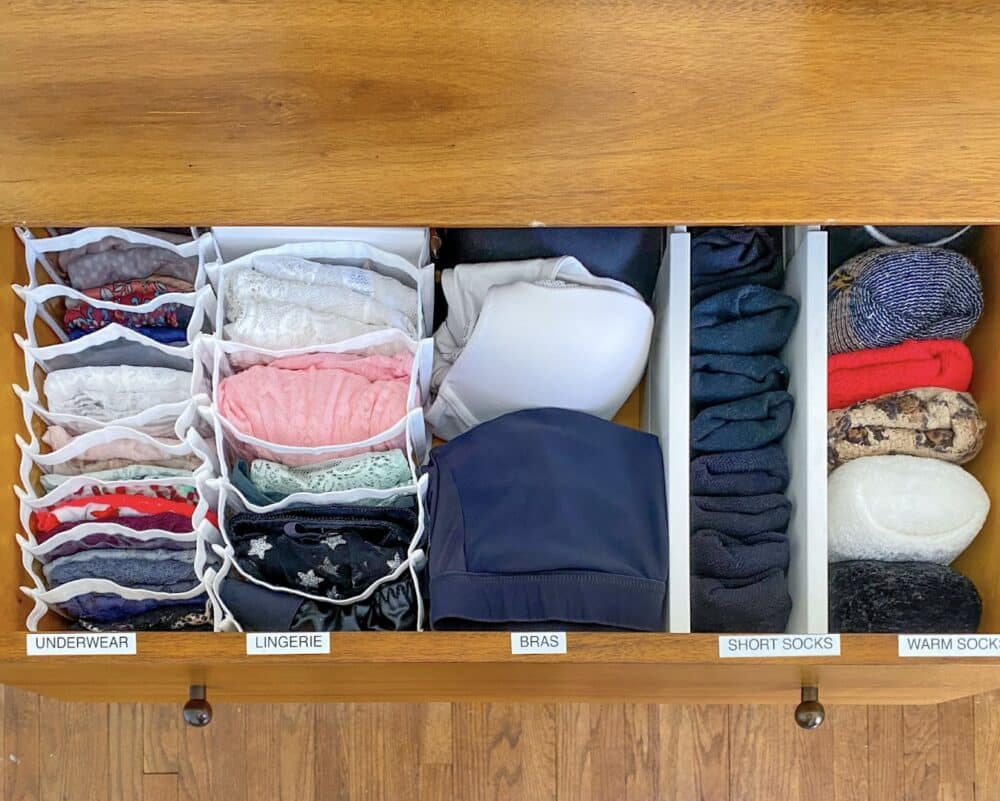
Common Shapewear Storage Mistakes to Avoid
Even with the best intentions, a few everyday habits can quietly reduce the life of your shapewear. Being aware of these small mistakes makes a big difference over time.
Hanging shapewear on hooks or hangers
While it may seem convenient, hanging stretches the fabric under its own weight, especially around the waist and straps. Over time, this leads to uneven support and a loose fit.
Stuffing shapewear into crowded drawers
Tight, overfilled drawers force shapewear to stay compressed even when it’s not being worn. This constant pressure weakens elastic fibres and causes edges to roll.
Storing shapewear when it’s still damp
Even slightly damp shapewear can develop odour or fabric damage when stored. Always allow it to air-dry completely before folding.
Mixing shapewear with heavy or rough garments
Zips, hooks, denim, and embellished clothing can pull at delicate compression fabric. Keeping shapewear separate helps prevent snags and stretching.
Avoiding these common mistakes doesn’t take much effort—just a little awareness. And that awareness goes a long way in keeping shapewear comfortable and supportive.
How Often Should You Re-Fold or Re-Arrange Shapewear?
Shapewear doesn’t need daily attention, but a little regular care helps it stay in good shape. Think of it as a gentle reset for your innerwear drawer.
After every wash
Once shapewear is washed and fully dry, refold it properly before putting it away. This prevents creases from settling into the fabric and keeps the compression even.
Once a month
Take a few minutes to straighten your shapewear drawer. Refold pieces that may have shifted, and check for any items that need extra care. This simple habit keeps everything organised and easy to access.
With seasonal changes
As wardrobes shift between seasons, rotate your shapewear too. Keep frequently worn pieces within easy reach and store occasion shapewear separately. This reduces unnecessary handling and helps each piece last longer.
If you already focus on washing and drying shapewear correctly, regular refolding completes the care cycle and keeps your shapewear feeling supportive and comfortable.
Simple Storage Tips to Make Shapewear Last Longer
Sometimes, it’s the smallest habits that have the biggest impact. With a few thoughtful storage tips, your shapewear can stay supportive and comfortable for much longer.
Use fabric pouches or drawer liners
Soft cotton or fabric pouches protect shapewear from dust and friction. Drawer liners add an extra layer of care and help the fabric rest smoothly.
Separate daily-wear and occasion shapewear
Keeping everyday shapewear separate from special-occasion pieces reduces unnecessary handling and helps maintain structure.
Avoid storing near perfumes or deodorants
Direct contact with perfumes, deodorants, or body sprays can weaken elastic fibres over time. Always store shapewear away from scented products.
Choose breathable spaces
Well-ventilated drawers or shelves prevent moisture build-up and keep fabrics fresh.
These simple habits don’t take much effort, but they quietly protect the fit and feel of your shapewear—wear after wear.
FAQs About Folding and Storing Shapewear
Can shapewear be hung in the wardrobe?
It’s best to avoid hanging shapewear. Hanging puts continuous pressure on elastic areas, especially the waist and straps, which can lead to stretching and loss of support over time.
Is rolling shapewear better than folding?
Tight rolling is not recommended. While loose rolling may seem space-saving, it can strain compression fabric. Flat, relaxed folding works best for maintaining shape.
Can shapewear lose compression just from storage?
Yes. Improper storage—such as stuffing into tight drawers or placing heavy clothes on top—can weaken elastic fibres even if the shapewear is washed correctly.
How should shapewear be stored while travelling?
Always use soft fabric pouches. Make sure shapewear is completely dry before packing and avoid plastic covers that trap moisture.
Should shapewear be stored separately from regular innerwear?
Ideally, yes. Keeping shapewear separate protects it from rough fabrics, hooks, and zips, and helps it retain its structure longer.

Conclusion
Shapewear may be hidden under our clothes, but it plays an important role in how we feel throughout the day. Giving it a little care after every wear—through gentle folding and thoughtful storage—goes a long way in preserving its fit, comfort, and support.
The good news is that these habits don’t require extra time or effort. A clean drawer, relaxed folds, and breathable storage are often all it takes to make shapewear last longer and perform better.
Treat shapewear like the wardrobe essential it is, and it will continue to support you beautifully—wear after wear.
Related Reading & Style Picks
If you’re building a mindful innerwear routine, these reads and handpicked collections can help you choose, care for, and wear shapewear more comfortably every day.
📖 Related Reading and Picks
Learn More on DealNxt
- 10 affordable Women’s Nightwear Sets in India (2025)
- Bra Buying Guide for Women in India (2025) | Fit & Comfort Tips
⚠️Disclaimer
This article is for general care guidance only. Always follow the care instructions provided on your shapewear label for best results.